
Roofing Systems
Clay and Concrete Tile Roofing
Tile gives a roof a distinctive architectural profile that holds up visually for a long time. The first question on any tile project is not appearance, it is whether the structure can carry the load.
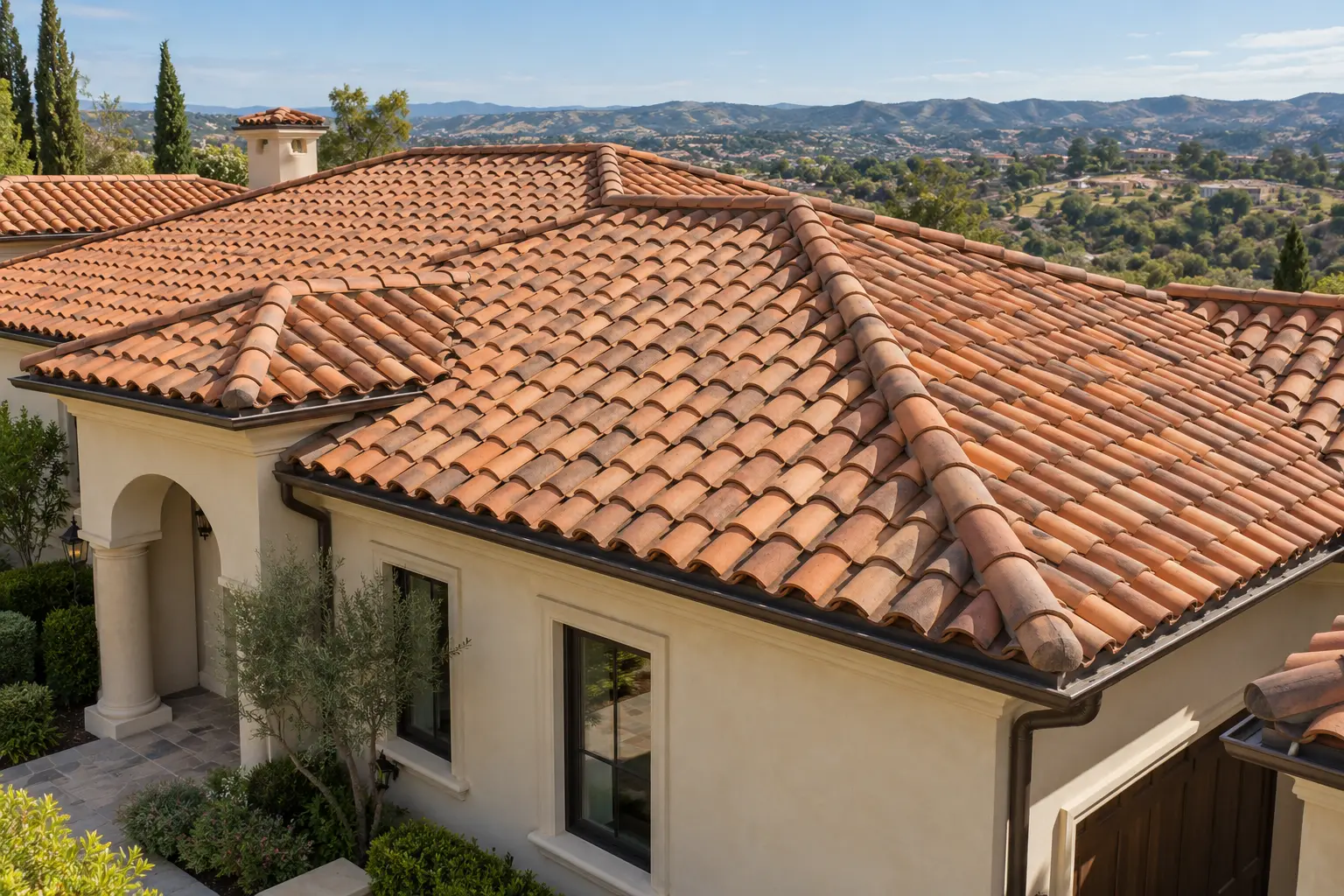
What this material is
Roof tile is formed from fired clay or from concrete, in barrel, S-shape, or flat profiles. Tiles are laid in courses over an underlayment system that does much of the water management work beneath them.
Properties and applications it may suit
- Homes with Mediterranean, Spanish, or Southwestern architecture where the profile belongs
- Structures whose framing and decking are confirmed able to support the weight of the selected tile system
- Owners who want a material with a long-standing architectural presence
- Roof shapes and pitches appropriate for a tile system, which we review during the inspection
Appearance and customization
- Barrel, S-tile, and flat profiles, each reading very differently on the same house
- Color comes from the clay body or from the concrete mix and surface treatment
- Field tile, hip, ridge, and rake pieces are matched within a system
- Profiles cast strong shadow lines that change through the day
Installation considerations
- Suitability starts with the structure. Tile is heavy, and the framing and decking must be evaluated for their ability to support the selected system before the project is planned
- Where the existing structure is not adequate, structural work by a qualified professional has to come first
- The underlayment beneath the tile is a critical part of the system and is installed accordingly
- Battens, fastening, and flashing details follow the specific tile system rather than general shingle practice
Maintenance considerations
- Do not walk on a tile roof; tiles break underfoot and a broken tile becomes an entry point
- Have cracked, slipped, or missing tiles replaced promptly
- Keep valleys and gutters clear so water is not held at the courses
- Remember that the underlayment ages even when the tile still looks sound, so periodic inspection matters
Common questions
- Can my existing roof structure hold tile?
- That has to be checked, not assumed. Tile is substantially heavier than asphalt shingles, and the framing and decking need to be evaluated for the specific system before the project moves forward. If they are not adequate, structural work comes first.
- If tile lasts a long time, does the roof never need work?
- The tile and the roof system are not the same thing. The underlayment, flashings, and penetrations beneath the tile age on their own schedule and are usually what needs attention first.
- What happens if a few tiles break?
- Individual tiles can normally be replaced. Matching depends on the profile and color still being available, which is one reason we suggest keeping spare tiles from the original project.
Talk through tile roofing on your property
We will look at your roof, explain what the system would involve here, and answer your questions before you decide.
Educate. Facilitate. Add value.