
Roofing Systems
Flat and Low-Slope Roofing with TPO
Flat roofs are not actually flat, and that is the whole point. A low-slope roof drains slowly, so the covering has to be a continuous surface rather than overlapping pieces that shed water quickly.
What this material is
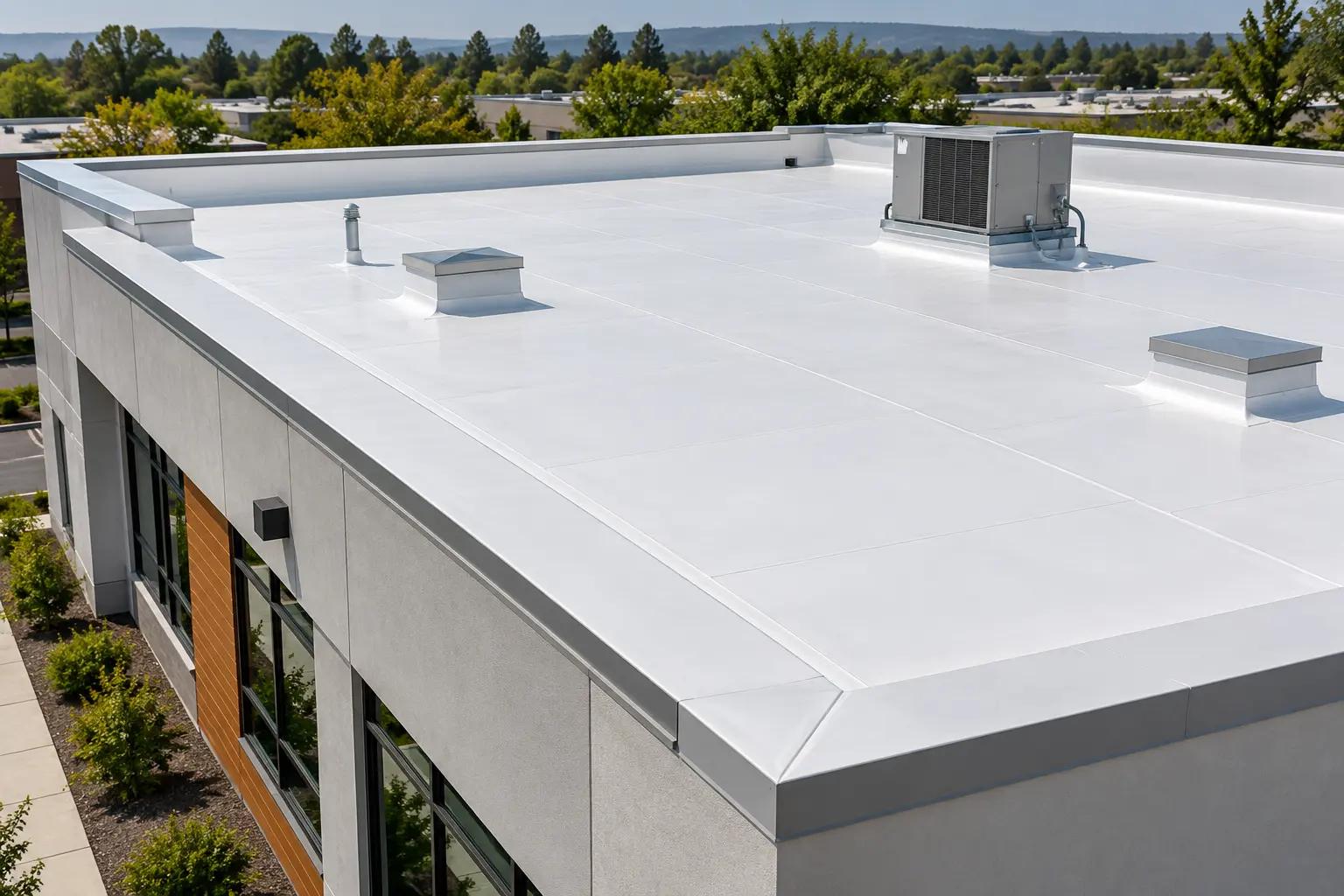
TPO is a thermoplastic polyolefin single-ply membrane. It arrives in wide rolls, is attached to the roof, and the seams between sheets are heat welded so the sheets fuse into one continuous surface. It is most often a light-colored, reflective sheet.
Properties and applications it may suit
- Low-slope residential sections such as porch roofs, additions, and flat patio covers
- Commercial and light commercial buildings with large low-slope areas
- Roofs where a shingle system would be inappropriate because water does not shed fast enough
- Areas where a continuous, weldable surface makes more sense than a lapped covering
Appearance and customization
- A flat, continuous membrane surface, usually light colored
- Visible weld lines where sheets meet
- Edge metal and terminations define the perimeter
- Most low-slope roofs are not visible from the ground, so appearance is usually secondary to detailing
Installation considerations
- Drainage comes first. We look at where water goes, whether there is adequate slope to the drains or scuppers, and where water currently stands after rain. Ponding is a design problem, not something a membrane fixes by itself
- Seams are heat welded and are the structural watertight joints of the roof. Weld quality and consistency are what make the system work
- Penetrations are the most common failure point on a low-slope roof. Pipes, curbs, drains, and equipment supports each get a detailed termination rather than a smear of sealant
- System selection depends on the building: slope, deck type, insulation, attachment method, and what the roof has to support. We assess the specific roof before specifying a system rather than applying a standard assembly
Maintenance considerations
- Keep drains, scuppers, and gutters clear; a blocked drain on a low-slope roof holds water immediately
- Have the roof walked periodically to check seams, terminations, and penetrations
- Watch for new equipment or trades adding penetrations without proper detailing
- Note any area that holds water more than a day or two after rain and tell us about it
Common questions
- What is TPO?
- TPO is a single-ply roofing membrane made from thermoplastic polyolefin. It is installed in wide sheets and the seams between sheets are heat welded, so the finished roof is one continuous surface instead of overlapping pieces.
- Why can I not just put shingles on my flat porch roof?
- Shingles rely on slope to shed water quickly. On a low-slope roof, water moves slowly and can sit at laps and penetrations, so a shingle system is the wrong tool. A welded membrane handles that condition.
- My flat roof holds water after rain. Is that normal?
- Standing water that does not clear within a day or two usually points to a drainage or slope problem, not just a membrane problem. We look at drains, scuppers, and slope as part of evaluating the roof.
Talk through flat and low-slope (tpo) on your property
We will look at your roof, explain what the system would involve here, and answer your questions before you decide.
Educate. Facilitate. Add value.