Fallen Leaves Can Prematurely Age Your Roof

Fall brings cooler weather and changing leaves, but those leaves do not always stay in the yard. Wind can carry leaves, sticks, pine needles, acorns, and other organic debris onto your roof, where they commonly collect in valleys, behind chimneys, around roof penetrations, and inside gutters.
A small amount of debris may not look serious, but allowing it to remain throughout fall and winter can create conditions that contribute to premature roof deterioration.
How leaves can affect your roof
Your roof is designed to shed water efficiently. Rain should travel down the shingles, through the roof valleys, into the gutters, and safely away from your home. Accumulated debris can interfere with that process.
Leaves naturally absorb and retain moisture. When wet leaves become packed together, the roofing materials underneath may remain damp much longer than the surrounding roof. Repeated exposure to trapped moisture can encourage algae, moss, mold, and deterioration of nearby roofing materials.
This does not mean a few leaves will immediately damage your roof. The concern is prolonged accumulation, particularly in shaded areas that receive limited sunlight and do not dry quickly.
JF Roofing recommends regularly removing leaves, pine needles, sticks, and other organic debris before they become wet, compacted, and difficult to remove.
Roof valleys are especially vulnerable
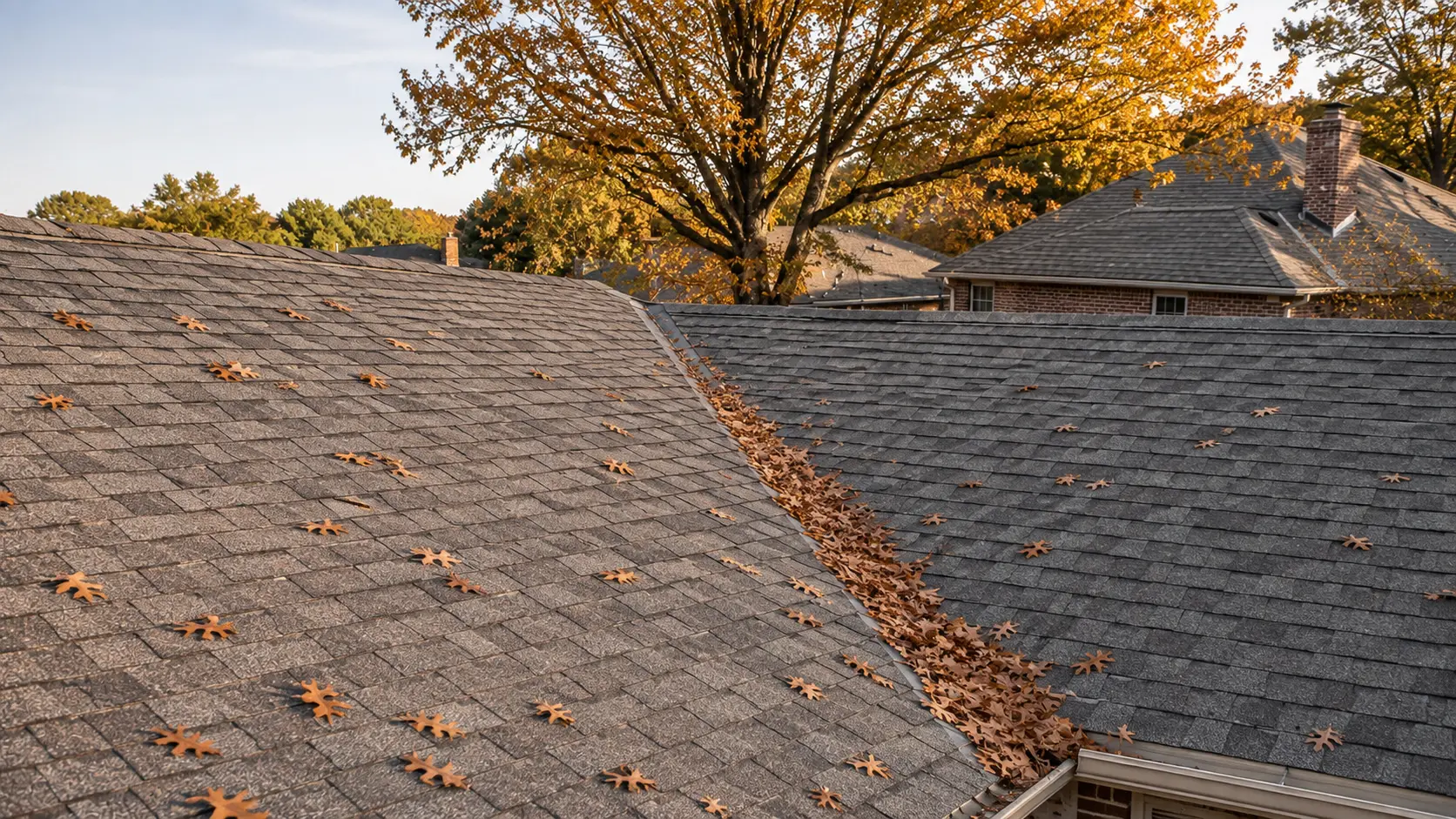
Roof valleys handle a significant amount of water because runoff from two adjoining roof slopes is directed into the same channel. Unfortunately, valleys are also natural collection points for leaves, sticks, and other windblown debris.
When debris becomes packed inside a valley, it can slow or redirect water instead of allowing it to flow freely toward the gutters. Water may remain against the shingles and flashing or travel into areas it was never intended to reach.
Keeping roof valleys completely clear is an important part of protecting your roofing system from unnecessary moisture exposure.
Sticks can cause additional problems
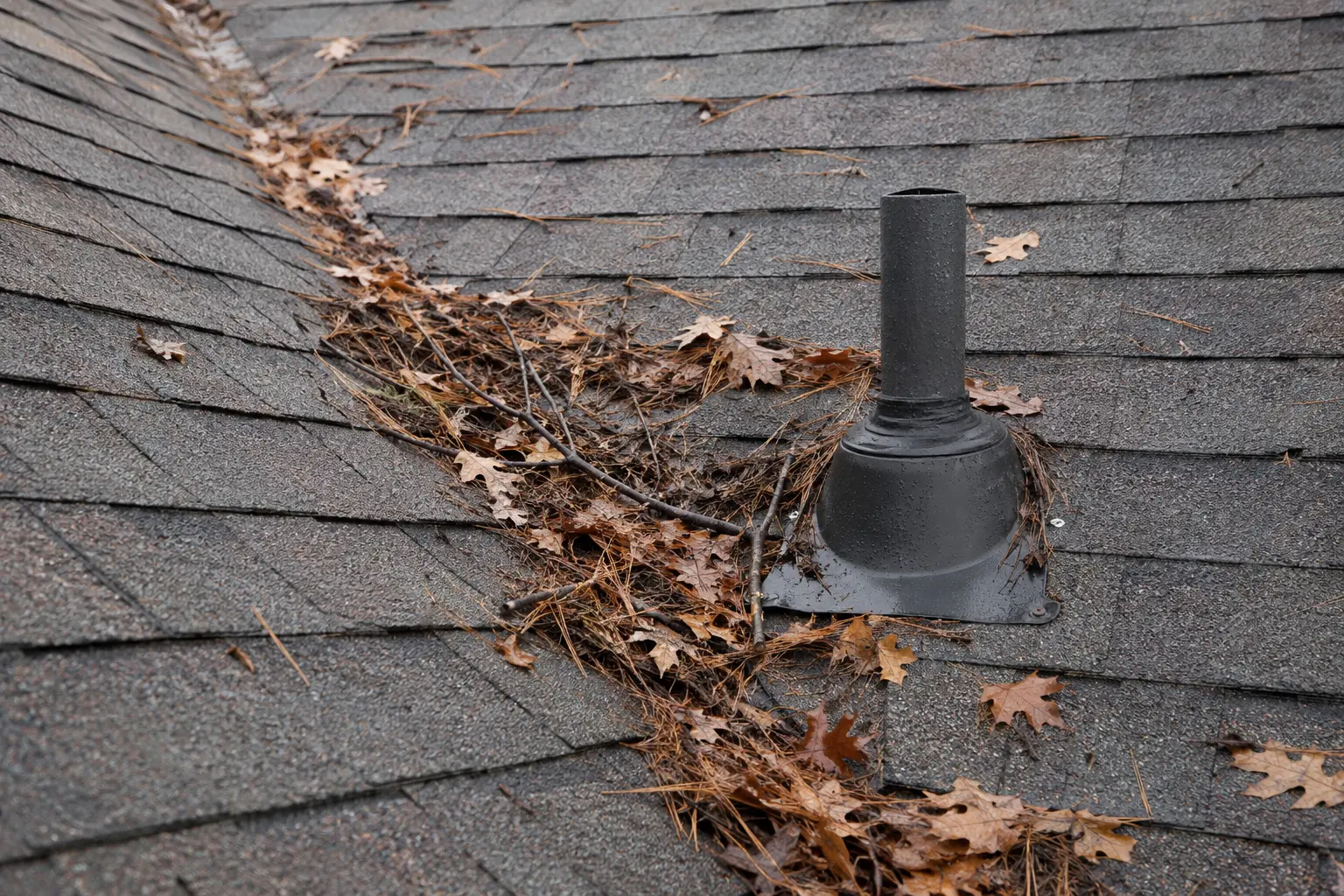
Small branches and sticks should also be removed from the roof. Wind can move them across the shingles, potentially scratching the surface or loosening protective granules. Larger falling branches may damage shingles, flashing, vents, or other roof components.
Sticks can also create small dams. Once a stick becomes lodged in a valley, behind a vent, or against a chimney, leaves and pine needles begin collecting around it. What started as one small branch can quickly become a much larger blockage.
JF Roofing also recommends monitoring trees growing close to your home. Branches touching the roof may scrape the shingles during windy conditions, while excessive shade can prevent wet areas from drying properly.
Don't forget the gutters and downspouts
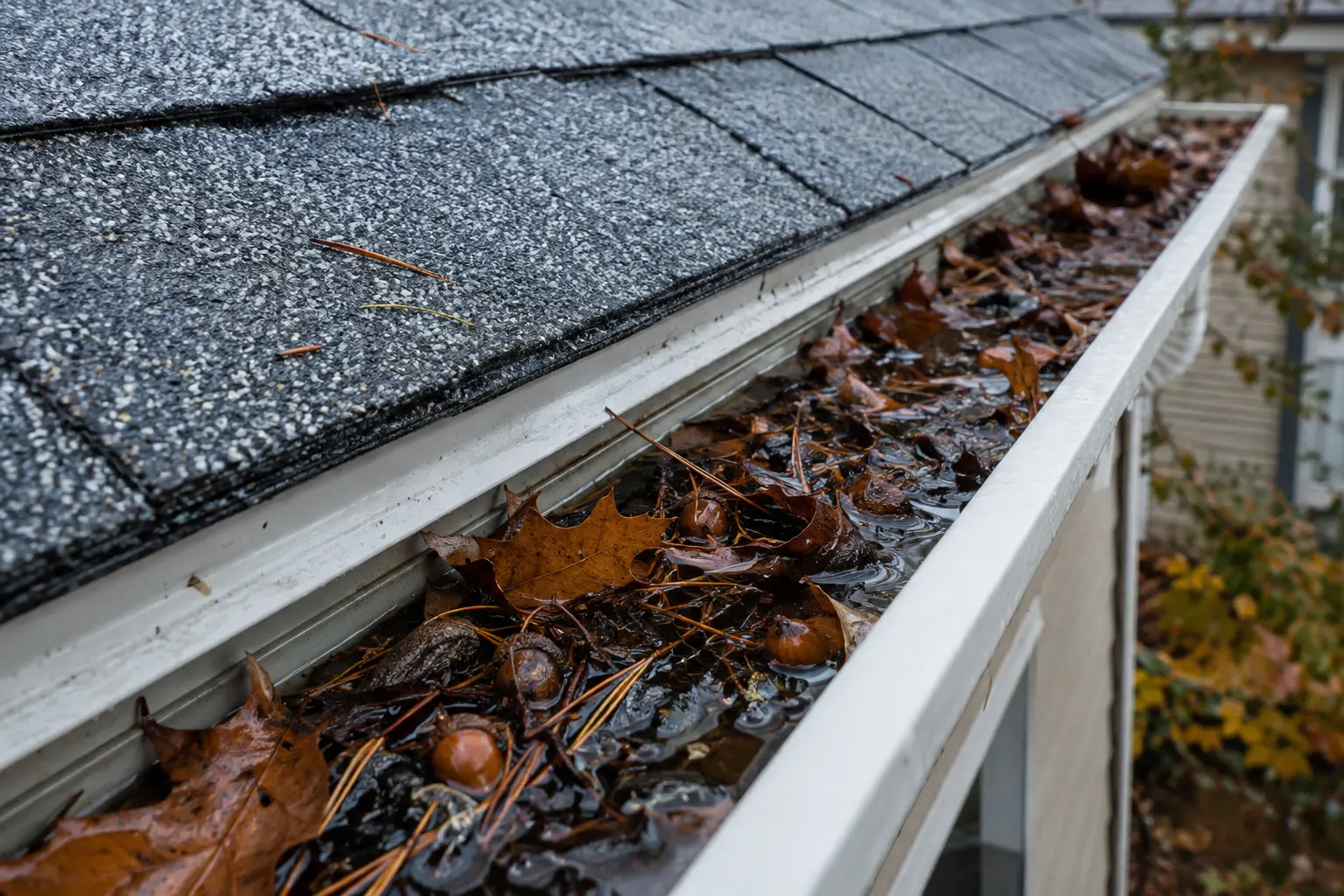
Cleaning the visible roof surface is only part of the job. Everything washed or blown off the roof eventually moves toward the gutters.
Leaves, twigs, acorns, shingle granules, and decomposing organic material can block gutters and downspouts. Once that happens, rainwater may back up near the roof edge, overflow onto the fascia and siding, contribute to wood rot or peeling paint, place additional weight on the gutter system, collect near the home's foundation, and create favorable conditions for insects and other pests.
After the debris is removed, the entire gutter system should be checked to verify that water travels freely through the gutters, into the downspouts, and safely away from the foundation.
As a general maintenance practice, JF Roofing recommends checking and cleaning gutters at least twice per year, typically during the spring and again after the majority of fall leaves have dropped. Homes surrounded by mature trees may require more frequent cleaning.
What a thorough fall roof cleanup should include
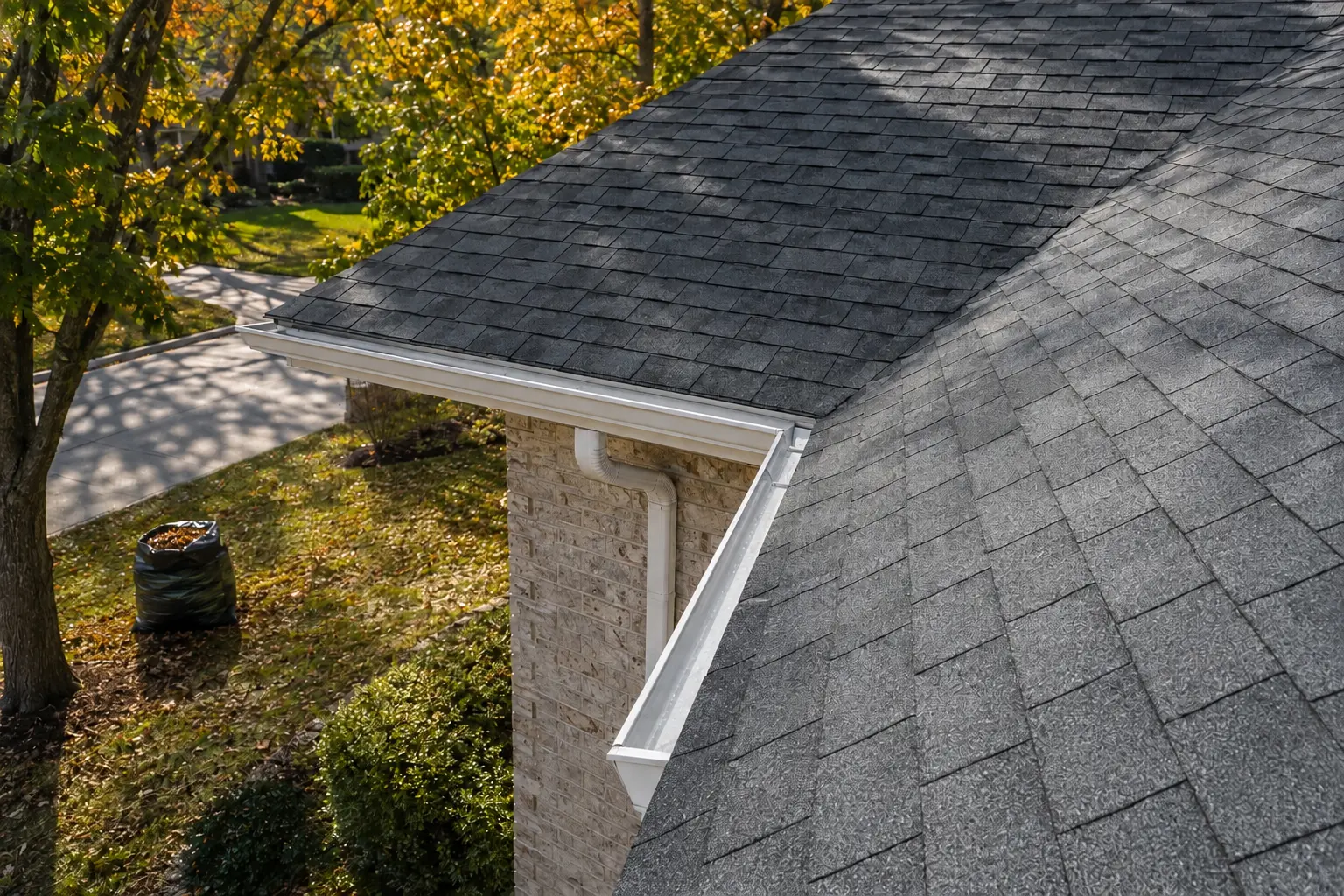
A proper seasonal cleanup should address the entire drainage path, not just the leaves that are easy to see. JF Roofing recommends removing leaves, sticks, pine needles, and acorns from every roof surface; clearing all roof valleys and areas behind chimneys; removing debris from around vents, skylights, and other roof penetrations; completely cleaning the gutters; clearing and testing every downspout; inspecting shingles and flashing for visible damage; checking the fascia and gutters for sagging, separation, or deterioration; and removing all collected debris from the property.
The goal is not simply to make the roof look cleaner. It is to restore the roof's ability to shed and drain water correctly.
Make roof cleanup part of your fall and winter maintenance
Fall is an excellent time to have your roof and gutters inspected and cleaned, especially if your home is surrounded by mature trees. Depending on the number and type of trees around the property, another cleanup may be necessary after the remaining leaves have fallen.
Homeowners should avoid walking on steep, wet, or debris-covered roofs. These surfaces can be extremely slippery, and unnecessary foot traffic may damage shingles. If your roof cannot be accessed safely, contact an experienced roofing professional.
At JF Roofing, we believe in educating homeowners, facilitating their needs, and adding value through dependable service. We can inspect your roof, identify areas where debris is collecting, and help ensure your roof, valleys, gutters, and downspouts are completely cleared before winter weather arrives.
Protect your roof before trapped debris becomes a larger problem. Contact JF Roofing at (817) 886-8080 to schedule a fall roof and gutter inspection.